Contents
Table of Contents
Quick Summary: This article provides brands with a comprehensive understanding of influencer engagement rate, explaining why it's a critical metric and how to accurately calculate it. You'll learn to leverage this knowledge to make data-driven decisions in your influencer marketing strategies.
Summary
* Engagement rate is a crucial metric for evaluating the effectiveness of influencer marketing campaigns.
* Accurately calculating engagement rate helps brands identify high-performing influencers and optimize their marketing spend.
* Trends in 2026 emphasize authentic engagement through micro and nano-influencers and AI-powered personalization.
* Common mistakes include overlooking fake engagement and using incorrect calculation methods.
* Measuring success requires tracking relevant KPIs like likes, comments, shares, and reach.
What is Engagement rate?
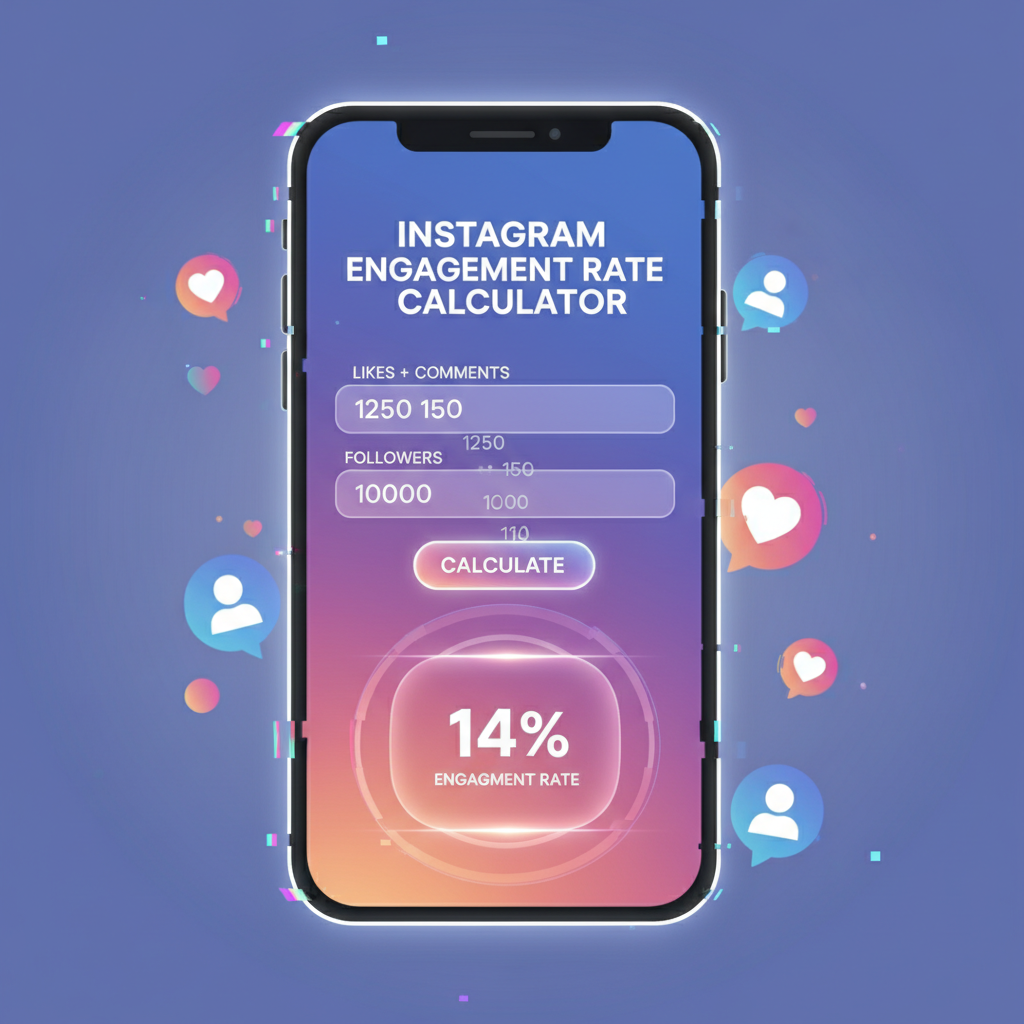
Engagement rate is a metric that measures the level of interaction an audience has with a piece of content or an influencer's profile. It's typically expressed as a percentage, representing the proportion of followers who engage with posts through likes, comments, shares, saves, and other actions. A higher engagement rate generally indicates a more active and interested audience.
For brands, engagement rate serves as a vital indicator of an influencer's ability to connect with their audience and drive meaningful results. It goes beyond simply looking at follower count; it demonstrates the quality of the audience and the influencer's ability to generate genuine interest and interaction. This helps brands determine the return on investment (ROI) for their influencer marketing campaigns.
Ignoring engagement rate can lead to wasted marketing spend on influencers with large but inactive or fake followings. It is essential to delve deeper than surface level metrics to assess the true value of an influencer partnership. Brands should prioritize finding influencers whose audience resonates with their target demographic and values.
For brands, Engagement rate means understanding the true value of an influencer's audience, not just the size. It's about assessing the quality of interaction and the potential for driving meaningful impact. It is a critical part of ensuring marketing spend leads to results.
- Reach-Based Engagement: Focus on engagement relative to the reach of a post, not just the total follower count. This gives a more accurate picture of how many unique people are engaging.
- Platform-Specific Calculation: Use the correct formula for each social media platform, as different platforms prioritize different types of engagement. For example, TikTok emphasizes video views, while Instagram values likes, comments, and saves.
- Authenticity Assessment: Look beyond the numbers to identify signs of genuine engagement, such as thoughtful comments and interactions that align with the content. Be wary of generic or bot-generated engagement.
- Benchmarking: Compare an influencer's engagement rate to benchmarks for their follower tier. This helps brands determine if an influencer's engagement is above or below average.
Using a reach-based engagement rate is crucial because it accounts for the fact that not all followers see every post. This provides a more accurate representation of the audience that is actually exposed to the content. According to Sprout Social, algorithms significantly affect the reach of posts, making follower count a less reliable indicator of engagement.
Different social media platforms have varying algorithms and user behaviors, so a one-size-fits-all approach to calculating engagement rate is not effective. Tailoring the calculation to each platform ensures that the metrics reflect the specific dynamics of that environment. Furthermore, assessing authenticity is essential to weed out influencers with fake followers or engagement.
Why Engagement rate Matters in 2026

In 2026, the influencer marketing landscape is more competitive and sophisticated than ever. Brands are increasingly focused on data-driven strategies and ROI, making engagement rate a critical metric for evaluating the success of influencer campaigns. Consumers are also more discerning, favoring authentic content and genuine interactions.
The rise of AI and automation is reshaping the way brands engage with their audiences. However, these technologies also present new challenges, such as the risk of generating inauthentic engagement and the need to maintain a human touch. Therefore, understanding and leveraging engagement rate is paramount for brands to stay ahead of the curve.
1. Emphasis on Authenticity
Consumers are becoming increasingly skeptical of sponsored content and are more likely to engage with influencers who are perceived as authentic and genuine. This means that brands need to prioritize finding influencers who align with their values and whose content resonates with their target audience.
Authenticity drives engagement, which in turn builds trust and loyalty. Influencers who create authentic content are more likely to foster meaningful relationships with their followers, leading to higher engagement rates and better results for brands.
This shift has critical implications for brands. Brands should carefully vet influencers, looking beyond surface-level metrics like follower count. Instead, focus on finding influencers with a genuine voice, a strong connection with their audience, and a history of creating engaging content. Focus on qualitative metrics (authenticity and community) over quantitative metrics (followers).
2. Micro and Nano-Influencers Gain Prominence
Micro and nano-influencers, who have smaller but more engaged audiences, are becoming increasingly popular among brands. These influencers often have higher authenticity and can drive better results for niche markets. Nano-influencers (1K-10K followers) and micro-influencers (10K-100K followers) consistently achieve the highest engagement rates, often exceeding 3-6%.
Brands are recognizing that it's better to reach a smaller, highly engaged audience than a large, disengaged one. Micro and nano-influencers offer a more cost-effective way to reach target audiences and generate meaningful results.
The rise of micro and nano-influencers has several practical implications for brands. First, brands need to invest in identifying and vetting these influencers. Second, brands need to be prepared to work with a larger number of influencers to achieve their marketing goals. Finally, brands need to focus on building long-term relationships with these influencers to maximize their impact. HubSpot found that micro-influencers tend to have higher engagement rates due to their close relationships with their followers.
3. Rise of AI-Powered Engagement
In 2026, AI is increasingly used to personalize content and automate engagement strategies, such as responding to comments and initiating conversations. This helps brands foster more meaningful interactions at scale.
AI-powered engagement can improve efficiency and personalization, allowing brands to connect with their audiences in a more relevant and timely way. This can lead to higher engagement rates and better customer relationships.
However, AI-powered engagement also poses some challenges. Brands need to ensure that their AI-powered strategies are authentic and don't come across as robotic or impersonal. They also need to be careful about using AI to generate fake engagement, as this can damage their reputation. Mckinsey offers advice on data-driven marketing strategies, emphasizing the importance of tracking engagement metrics to optimize campaigns and improve customer relationships.
What's New in 2026
1. Personalized Engagement Experiences
AI-powered tools are now sophisticated enough to analyze user data and personalize engagement experiences in real-time. This includes tailoring content recommendations, customizing responses to comments, and initiating conversations based on individual user preferences.
Personalized engagement experiences lead to higher engagement rates and stronger customer relationships. Consumers are more likely to interact with content that is relevant to their interests and needs.
Brands can leverage AI-powered personalization tools to create more meaningful engagement experiences for their audiences. This includes using AI to analyze user data, personalize content recommendations, and automate engagement strategies.
2. Virtual Influencers with Hyper-Realistic Engagement
Virtual influencers, who are computer-generated characters with human-like qualities, are becoming increasingly popular. These influencers can generate hyper-realistic engagement through AI-powered interactions and personalized content.
Virtual influencers offer brands a unique way to control their messaging and create engaging content. They can also be used to reach new audiences and generate buzz.
Brands can leverage virtual influencers to create engaging content and reach new audiences. However, it's important to be transparent about the fact that the influencer is virtual and to ensure that the content is authentic and relevant to the target audience. Research from Content Marketing Institute shows that transparency is key to building trust with consumers.
3. Immersive Engagement in the Metaverse
The metaverse, a virtual world where users can interact with each other and with digital objects, is creating new opportunities for immersive engagement. Brands can create virtual experiences, host events, and offer exclusive content within the metaverse.
Immersive engagement in the metaverse can create a sense of community and loyalty among consumers. It also offers brands a unique way to showcase their products and services.
Brands can leverage the metaverse to create immersive engagement experiences for their audiences. This includes creating virtual stores, hosting virtual events, and offering exclusive content within the metaverse.
How does it help
Step 1: Define Your Engagement Goals
Clearly define what you want to achieve with your influencer marketing campaign. Are you aiming to increase brand awareness, drive website traffic, generate leads, or boost sales? Your engagement goals will influence how you measure success.
* Establish specific, measurable, achievable, relevant, and time-bound (SMART) goals for your influencer campaigns. * Determine which engagement metrics (likes, comments, shares, saves, reach) are most relevant to your goals. * Consider the target audience for your campaign and the type of content that resonates with them.
Example: A beauty brand wants to increase brand awareness among Gen Z consumers. Their goal is to increase engagement (likes, comments, shares) on Instagram posts featuring their products by 20% within three months.
Step 2: Identify and Vet Potential Influencers
Carefully research and evaluate potential influencers to ensure they align with your brand values and have a genuine, engaged audience. Look beyond follower count and focus on engagement rate, content quality, and audience demographics.
* Use social media analytics tools to assess influencers' engagement rates and audience demographics. * Review their past content to ensure it aligns with your brand values and target audience. * Check for signs of fake followers or engagement, such as sudden spikes in follower count or generic comments.
Example: A food delivery service is considering partnering with a food blogger. They use social media analytics tools to assess the blogger's engagement rate, which is 4.5%, well above the average for their follower tier. They also review the blogger's past content and find that it features healthy, delicious meals, which aligns with their brand values.
Step 3: Calculate Engagement Rate Accurately
Use the appropriate formula for each social media platform to calculate engagement rate. Common formulas include:
(Total Engagements / Reach) x 100 (Total Engagements / Followers) x 100
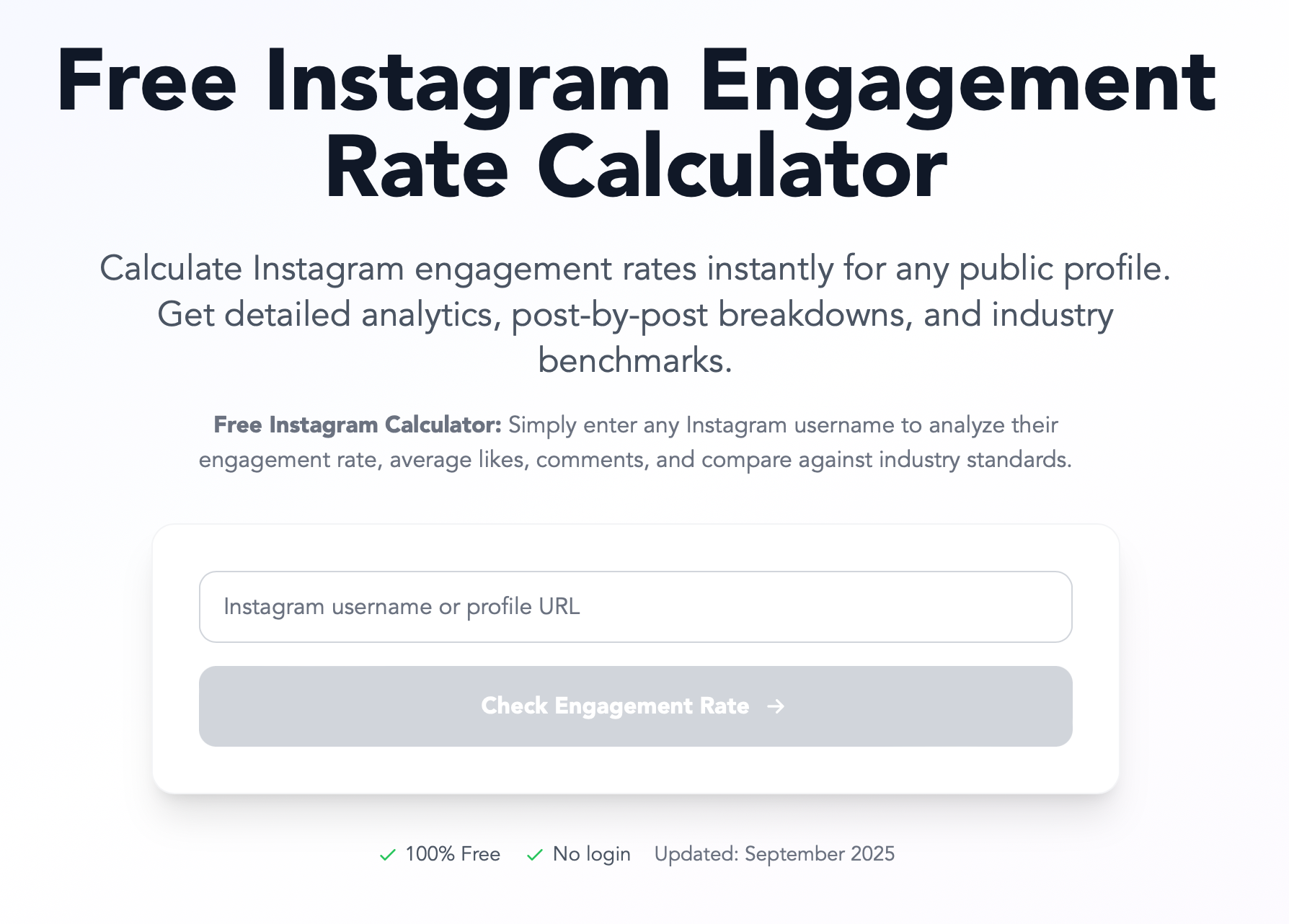
* Use the engagement rate calculator provided by Social Cat: Instagram Engagement Rate Calculator * Ensure you're using the correct formula for each platform (Instagram, TikTok, YouTube, etc.). * Track engagement rate over time to monitor performance and identify trends.
Example: An influencer's Instagram post receives 500 likes, 50 comments, and 10 shares, with a reach of 10,000. The engagement rate is ((500 + 50 + 10) / 10,000) x 100 = 5.6%.
Step 4: Monitor and Track Engagement Metrics
Continuously monitor engagement metrics throughout your influencer campaign to assess performance and identify areas for improvement. Track likes, comments, shares, saves, reach, and other relevant metrics.
* Use social media analytics tools to track engagement metrics in real-time. * Monitor the comments section to identify sentiment and address any concerns. * Track the performance of individual posts and identify which content formats are most engaging.
Example: A clothing retailer is running an influencer campaign on Instagram. They use social media analytics tools to track engagement metrics and find that posts featuring user-generated content receive higher engagement rates than posts featuring product shots.
Step 5: Analyze and Optimize Your Strategy
Analyze your engagement data to identify what's working and what's not. Use these insights to optimize your influencer strategy and improve your results.
* Identify which influencers are driving the most engagement and which are underperforming. * Analyze the content formats that are most engaging and replicate them in future campaigns. * Experiment with different messaging and calls to action to see what resonates best with your target audience.
Example: After analyzing engagement data, a travel agency finds that influencers who share personal travel stories receive higher engagement rates than those who simply promote destinations. They decide to focus on partnering with influencers who are authentic storytellers.
Step 6: Focus on Building Long-Term Relationships
Focus on building long-term relationships with influencers who consistently drive high engagement and align with your brand values. This can lead to more authentic and effective collaborations.
* Offer influencers exclusive content and opportunities to collaborate on future campaigns. * Provide influencers with feedback and support to help them create engaging content. * Recognize and reward influencers for their contributions to your brand.
Example: A fitness brand partners with a fitness influencer for a year-long campaign. They provide the influencer with exclusive access to new products and opportunities to collaborate on workout videos and blog posts.
Step 7: Use Engagement Rate Calculator to Evaluate Influencers
Brands should use an engagement rate calculator like the one here: Instagram Engagement Rate Calculator.
* Brands should run a test of the influencers last 10 posts to ensure ER is calculated correctly * Brands should look at the influencers historical performance, looking at their ER for the past year. * Brands should always ask for analytics and data from their prospective influencers.
Common Mistakes to Avoid
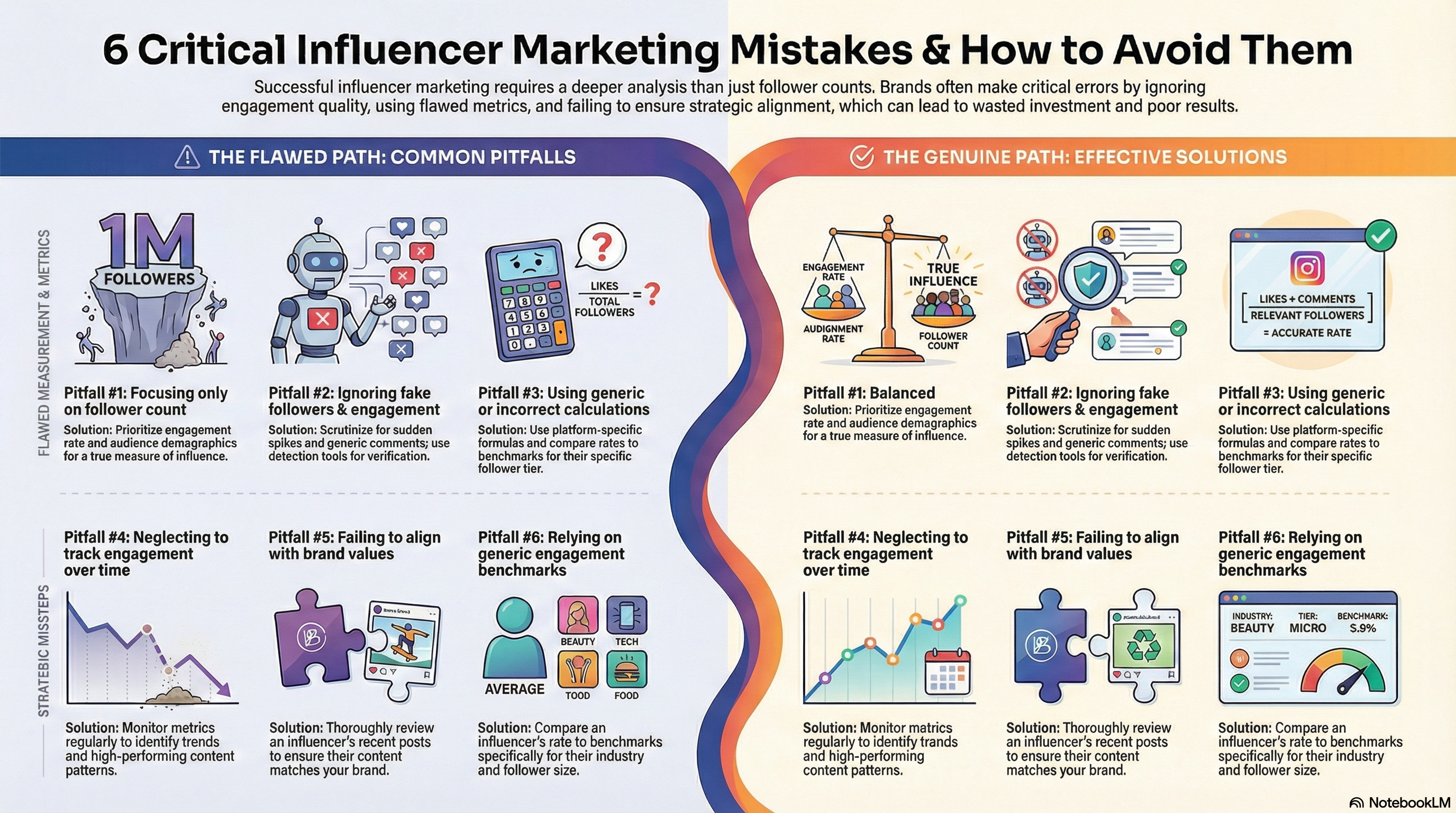
Mistake 1: Focusing Solely on Follower Count
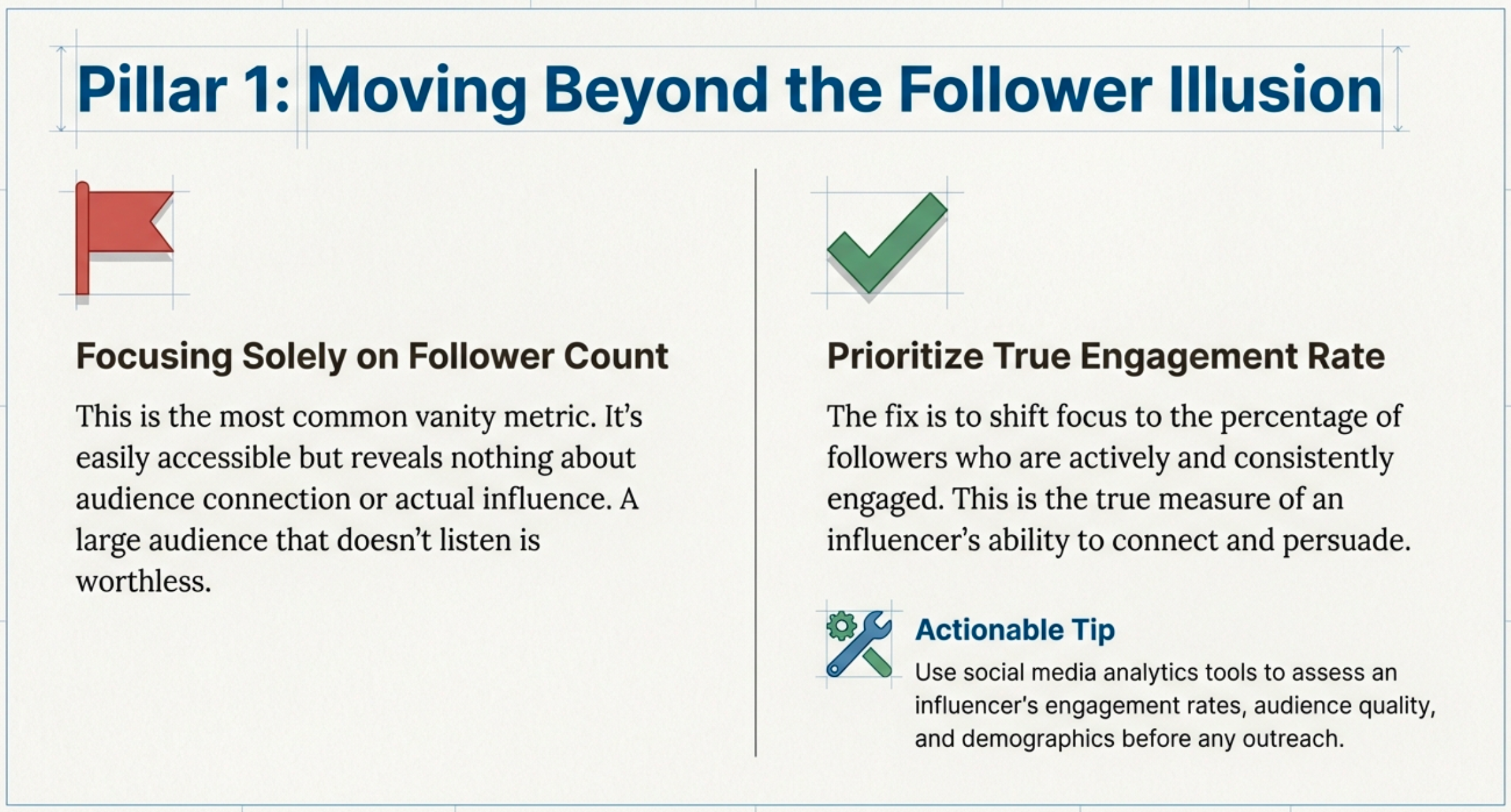
Why it happens: Follower count is an easily accessible metric, but it doesn't necessarily translate to engagement or influence. The fix: Prioritize engagement rate over follower count. Look for influencers with a high percentage of active and engaged followers. Practical tip: Use social media analytics tools to assess influencers' engagement rates and audience demographics.
Mistake 2: Ignoring Fake Engagement
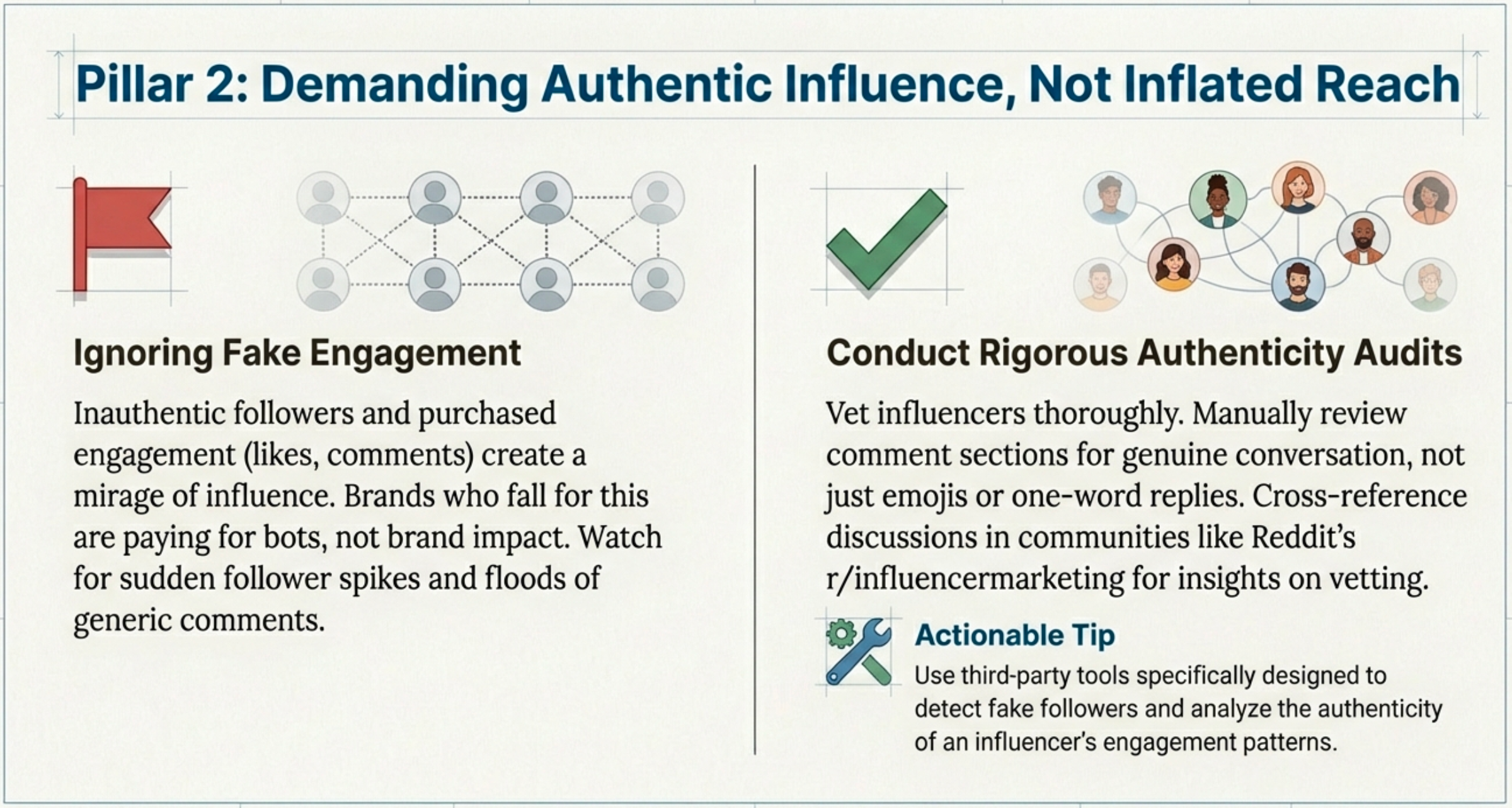
Why it happens: Fake followers and engagement can inflate an influencer's apparent reach and influence. The fix: Be wary of influencers with sudden spikes in follower count, generic comments, or unusually high engagement rates. Practical tip:Use tools to detect fake followers and engagement, and manually review comments for authenticity. Reddit discussions in r/influencermarketing reveal common concerns about fake followers and engagement, emphasizing the need for thorough influencer vetting.
Mistake 3: Using the Wrong Calculation Method
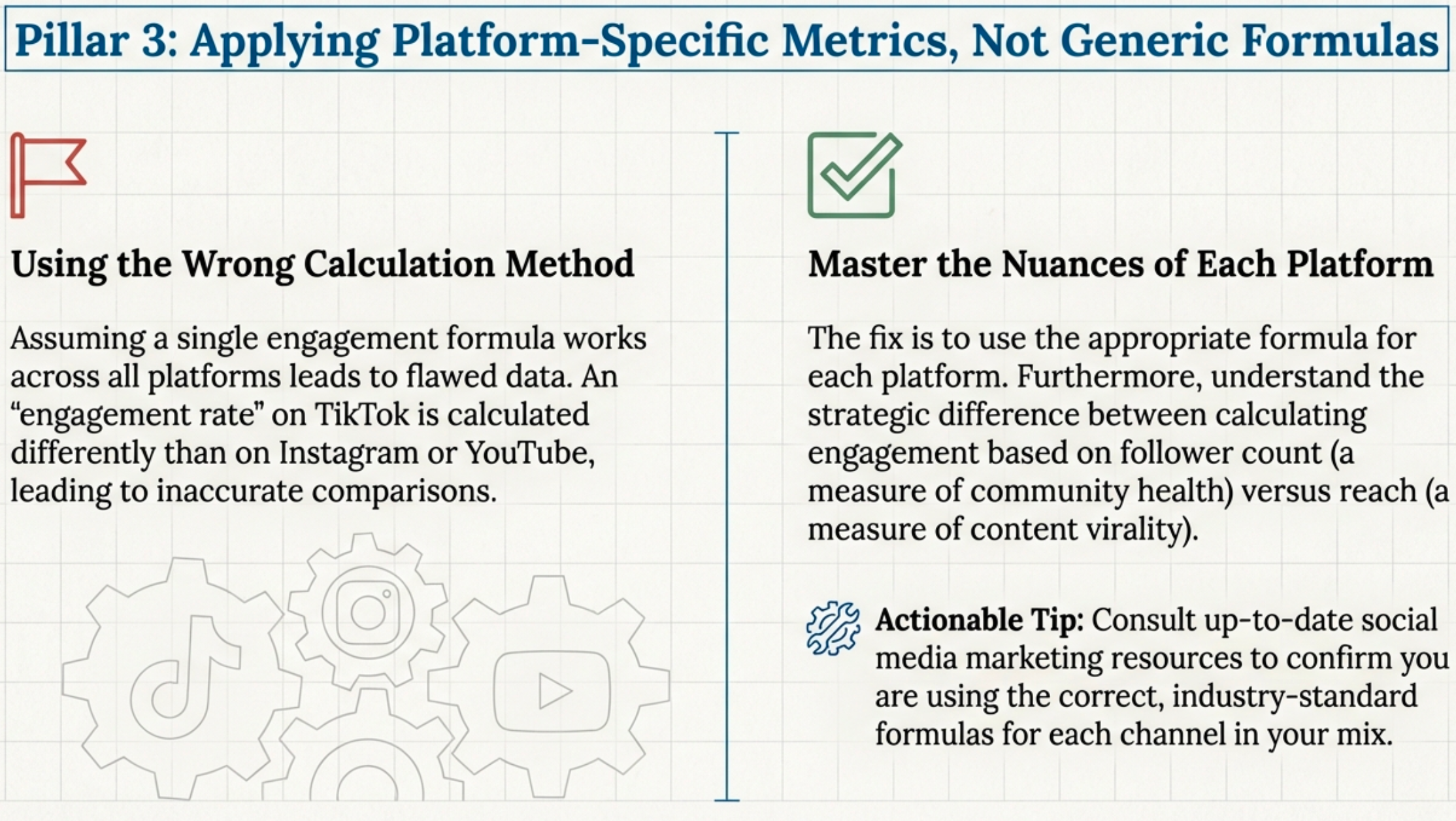
Why it happens: Different social media platforms have different engagement metrics, and using the wrong formula can lead to inaccurate results. The fix: Use the appropriate formula for each platform and consider reach versus follower-based calculations. Practical tip: Consult social media marketing resources to ensure you're using the correct formula for each platform.
Mistake 4: Neglecting to Track Engagement Over Time
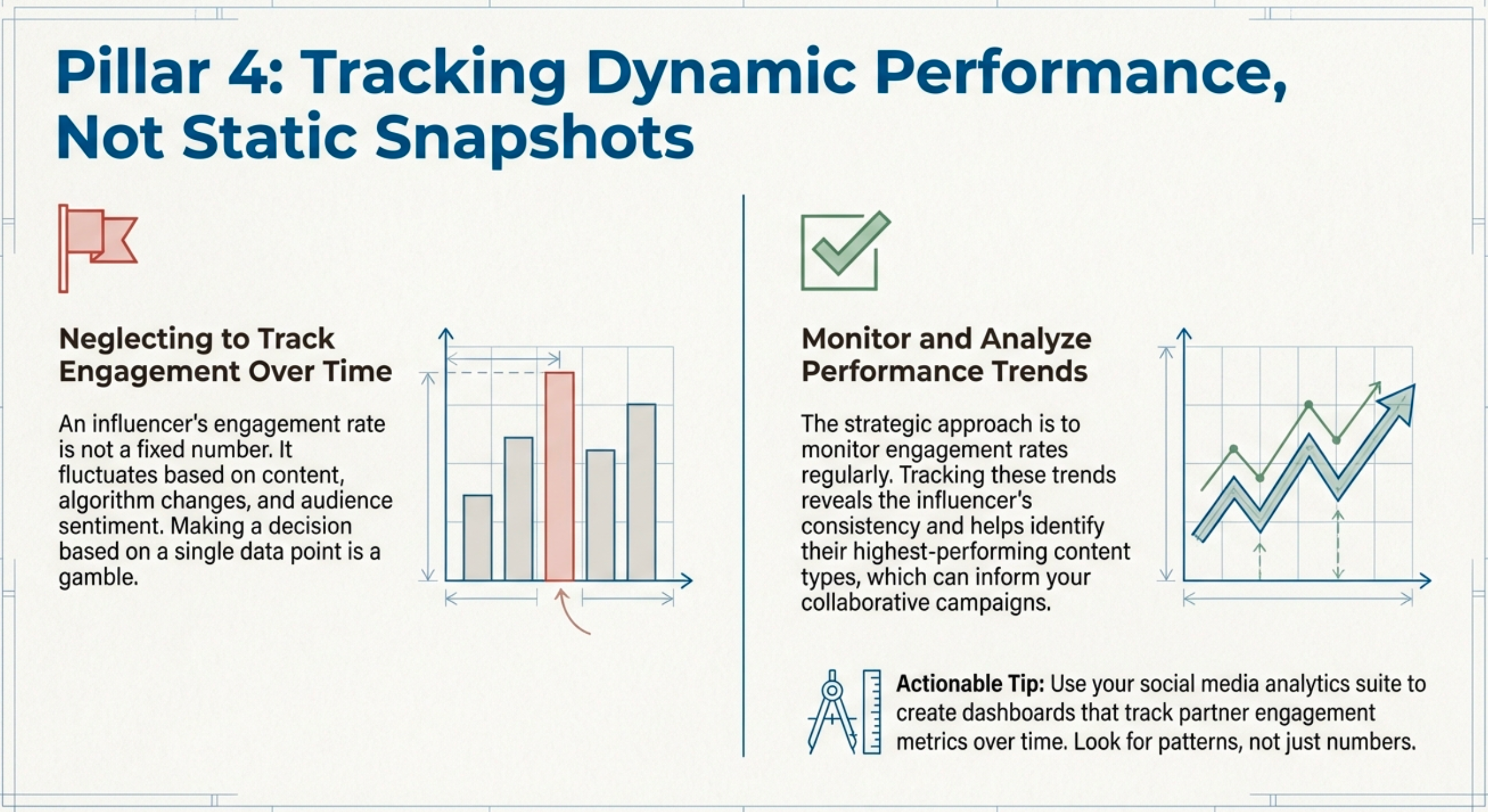
Why it happens: Engagement rates can fluctuate over time, and failing to track them can lead to missed opportunities or wasted investments. The fix: Monitor engagement rates regularly and track trends to identify high-performing content and influencers. Practical tip: Use social media analytics tools to track engagement metrics over time and identify patterns.
Mistake 5: Not Aligning with Brand Values
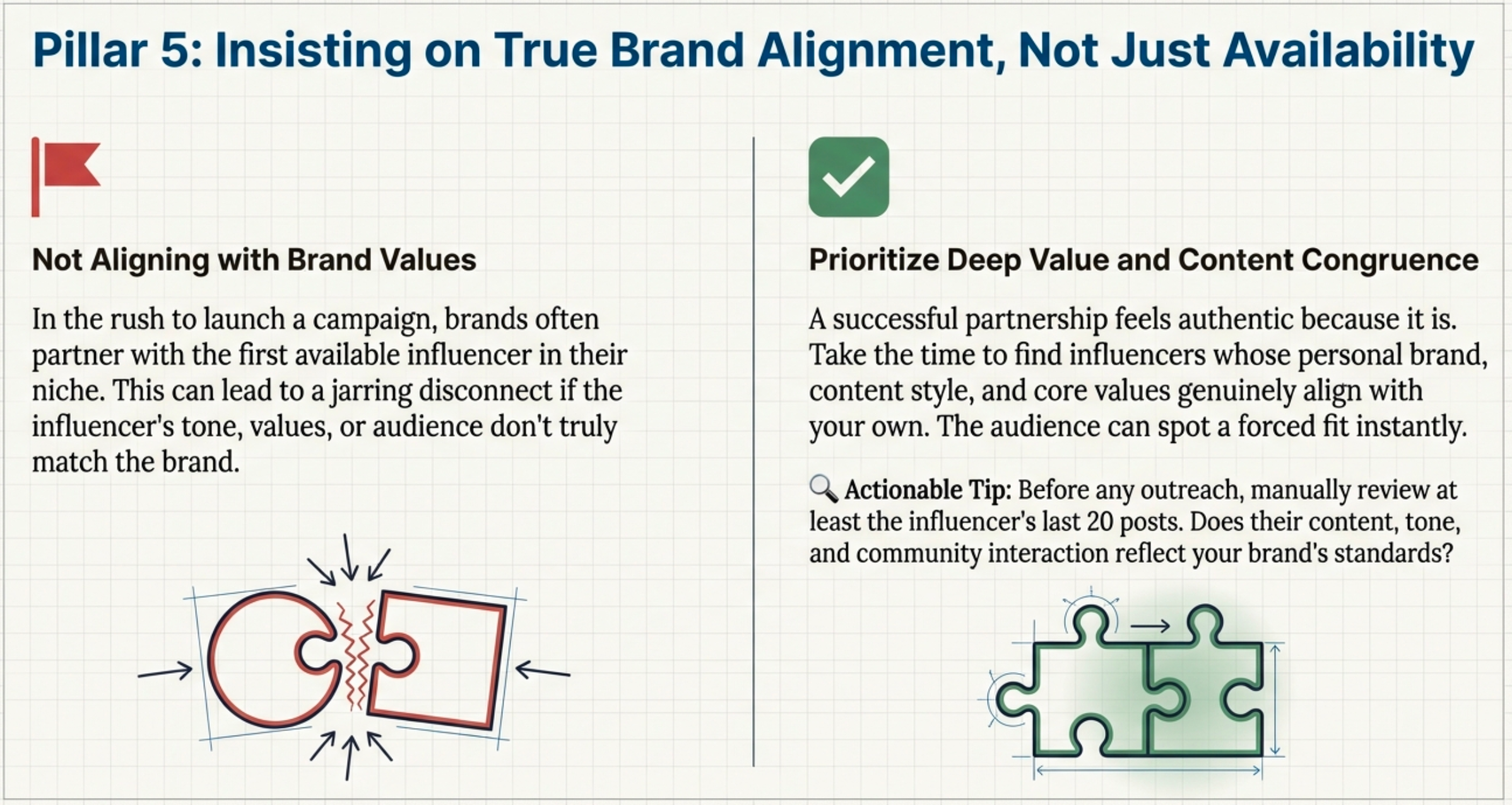
Why it happens: Brands may want to find influencers as quickly as possible, not taking time to align with their brand. The fix: Take the time to find influencers whose content and values align with your brand. Practical tip: Review the influencers last 20 posts to ensure there's alignment.
Mistake 6: Relying on Generic Engagement Rate Benchmarks

Why it happens: Generic benchmarks don't account for nuances. The fix: Compare an influencer's engagement rate to benchmarks for their follower tier. Practical tip: Use the engagement calculator at Instagram Engagement Rate Calculatorto see where their ER stands.
Measuring Success
Primary KPIs
Engagement Rate
What it measures: The level of interaction an audience has with an influencer's content. Target benchmark: Above 3-6% for nano and micro-influencers. Track it by: Social media analytics tools.
Reach
What it measures: The number of unique users who saw the influencer's content. Target benchmark: Dependent on campaign goals and influencer reach. Track it by: Social media analytics tools.
Website Traffic
What it measures: The number of users who visited your website as a result of the influencer campaign. Target benchmark: Dependent on campaign goals and website traffic. Track it by: Website analytics tools (e.g., Google Analytics).
Sales Conversions
What it measures: The number of sales generated as a result of the influencer campaign. Target benchmark: Dependent on campaign goals and product pricing. Track it by: Sales tracking tools.
Review Cadence
Daily: Monitor comments and mentions to identify sentiment and address any concerns. Weekly: Track engagement metrics (likes, comments, shares, saves, reach) and identify high-performing content.
Monthly: Analyze campaign performance and identify areas for improvement. Generate a report summarizing key metrics.
Quarterly: Review overall influencer marketing strategy and make adjustments based on performance data.
According to Forrester, organizations that continuously monitor and optimize their influencer marketing campaigns are more likely to achieve their business goals.
FAQ
Q: What is a good engagement rate for Instagram?
A: A good Instagram engagement rate is typically above 1%, but this varies significantly based on follower count. Nano-influencers (1K-10K followers) and micro-influencers (10K-100K followers) consistently achieve the highest engagement rates, often exceeding 3-6%. Mega-influencers and celebrities (500K+ followers) typically see lower rates (1-3%) due to their massive audience size.
Q: How do I calculate engagement rate on TikTok?
A: A typical way to calculate engagement rate on TikTok is the sum of likes, comments and shares divided by the number of followers, multiplied by 100. This helps to assess how engaged an influencer's audience is with their content.
Q: What are some signs of fake engagement?
A: Signs of fake engagement include sudden spikes in follower count, generic comments that don't align with the content, and unusually high engagement rates compared to similar accounts.
Q: How can I improve my engagement rate?
A: You can improve your engagement rate by creating high-quality, relevant content that resonates with your target audience, engaging with your followers in the comments section, and running contests and giveaways.
Q: Should I focus on reach or follower count when evaluating influencers?
A: Reach is a more accurate indicator of potential impact than follower count, as it represents the number of unique users who actually saw the influencer's content.
Q: How often should I track engagement rates?
A: You should track engagement rates regularly, at least weekly, to monitor performance and identify trends.
Q: What's the difference between engagement rate based on reach and engagement rate based on followers?
A: Engagement rate based on reach measures the level of interaction relative to the number of people who actually saw the content, while engagement rate based on followers measures the level of interaction relative to the total number of followers. Reach-based engagement is generally considered more accurate.
Q: How important is brand alignment when choosing influencers?
A: Brand alignment is crucial for ensuring that the influencer's content and values align with your brand's values. This helps to build trust and credibility with your target audience.
Q: Is it better to work with many micro-influencers or one mega-influencer?
A: It depends on your goals and budget. Micro-influencers often have higher engagement rates and can be more cost-effective, while mega-influencers can reach a larger audience.
Q: How can I use engagement rate to optimize my influencer marketing strategy?
A: By analyzing engagement rates, you can identify which influencers are driving the most engagement, which content formats are most engaging, and which strategies are most effective.
Conclusion
Understanding and leveraging influencer engagement rate is critical for brands seeking to maximize their marketing ROI in 2026. By accurately calculating engagement rate, avoiding common mistakes, and focusing on authentic engagement, brands can identify high-performing influencers and create effective campaigns that drive meaningful results. The landscape continues to change, but with these best practices you're sure to succeed.
Remember to prioritize authenticity, build long-term relationships with influencers, and continuously analyze and optimize your strategy to stay ahead of the curve. By doing so, you can unlock the full potential of influencer marketing and achieve your business goals.
Related Resources

Written by
Stefan A.
Stefan is a Growth Marketer turned founder with a background in customer acquisition, Influencer Marketing, and early-stage startups. At Social Cat, Stefan drives day-to-day operations and growth, helping small brands connect with the right influencers to scale their reach and impact.