

Contents
Table of Contents
When I first thought about sending a gifting package, I honestly assumed it would be one of the easiest parts of influencer marketing. In my head, the process seemed pretty simple: find a creator who looked like a good fit, send them the product, and wait for the content to show up. It felt straightforward, almost effortless from the outside.
But once I actually went through it, I realized there was a lot more involved than I expected.
What I thought would be a simple product send quickly turned into a lesson in creator fit, communication, timing, packaging, and follow-up. I started noticing that even small details could completely change the outcome. The way I introduced the brand mattered. The creator I chose mattered. How clearly I explained expectations mattered. Even the unboxing experience and the follow-up after delivery played a bigger role than I expected.
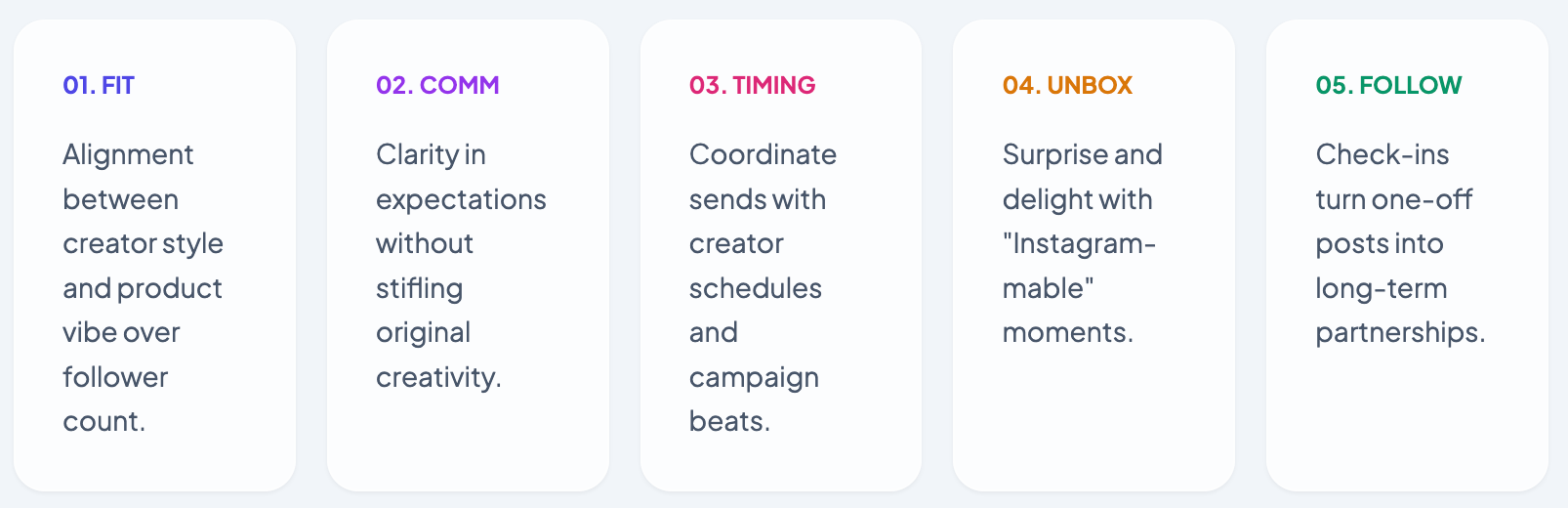
The biggest surprise was realizing that gifting is not really just about sending a package. It is about building the right kind of collaboration around that package. A creator saying yes does not always mean content will follow, and a good product does not automatically mean it will feel exciting or worth sharing.
Looking back, I can see how many things I underestimated the first time around. Gifting can absolutely work, but it works much better when you treat it like a real strategy instead of a simple shipment.
Gifting Is Not as Simple as It Looks
At first glance, gifting can seem like one of the easiest ways to start working with creators. There is no large campaign budget, no complicated contract, and no paid media plan attached to it. You send a product, hope the creator likes it, and expect the collaboration to unfold naturally from there.
In reality, there is much more behind it.
The product itself is only one part of the cost. You also have to think about packaging, shipping fees, and the time spent finding the right creators, reaching out, answering questions, collecting addresses, and managing follow-ups. Even when no direct payment is involved, gifting still requires time, effort, and budget.
Follow-up is another part many brands underestimate. Sending the package is not the finish line. You still need to track whether it arrived, whether the creator received it well, and whether the collaboration is moving forward. Without that extra step, it becomes very easy for gifting campaigns to lose momentum.
What seems like a low-effort campaign format is actually a process with a lot of moving parts. The better you understand those parts from the start, the better your chances of turning a gifted product into real content and a real creator relationship.
Choosing the Right Creator Matters More Than Follower Count
One of the easiest mistakes to make with gifting campaigns is assuming that bigger automatically means better. A creator with a large following might seem like the safest choice at first, but follower count alone does not tell you whether that person is actually a good fit for your brand. Keep in mind that, gifted collaborations with aligned creators see 13.59% higher engagement and 81.39% more views when the influencer's niche matches the product.
In many cases, smaller creators who genuinely match your product, style, and target audience can be much better gifting partners. That is one of the reasons platforms like Social Cat focus so much on helping brands find creators based on fit, not just size.
Gifting works best when the product feels natural in the creator’s content. If someone already shares the kind of lifestyle, interests, or recommendations that align with your brand, the collaboration is more likely to feel authentic. Their audience is also more likely to respond well because the content does not feel random or forced.
On the other hand, a bigger creator with no real connection to the product may accept the package but never do much with it. Even if they post, the content can feel flat because the product does not naturally fit their usual style or audience. Reach may look impressive on paper, but relevance is often what drives better results.
That is why choosing the right creator is not really about finding the biggest audience. It is about finding the right one. A smaller creator with strong alignment, genuine interest, and the ability to present your product naturally can often bring more value than a larger creator who is simply not the right match. And if you are using a platform like Social Cat, that fit becomes much easier to spot from the start.
A Yes Does Not Always Mean Content Is Coming
This was probably one of the biggest lessons. When a creator says yes to receiving a product, it is easy to assume the next step is content. But in gifting campaigns, that is not always how it works.
A creator might be happy to accept the package, genuinely like the brand, and still never post anything. Sometimes they get busy. Sometimes the product is not the right fit once it arrives. Sometimes they simply do not feel a strong reason to create content around it. And if expectations were never clearly discussed, they may not even see posting as part of the agreement.
That is where many first gifting campaigns go wrong. Brands often treat interest as confirmation, when really it is just the beginning of the conversation.
A yes can open the door, but it does not guarantee content. In gifting campaigns, the outcome depends a lot on what was discussed before the package was ever sent.
Clear Communication Makes a Big Difference
One thing I learned quickly is that gifting campaigns work much better when everything is clear from the beginning. It is not enough to simply say you would love to send a product and hope the rest falls into place. The more upfront you are, the easier it is for both sides to understand what the collaboration actually looks like.
That starts with being clear about what you are sending. Creators should know which product they will receive, why you think it is a good fit for them, and what makes the collaboration relevant in the first place. This helps the offer feel more intentional and less like a mass message sent to dozens of people. The FTC requires influencers to disclose any payment or freebies brands give them, even for gifted campaigns.
It is also important to be honest about the kind of content you are hoping for. Whether you would love a story, a reel, an unboxing, or simply a mention, it helps to say that early. You do not need to sound demanding, but you do need to set direction. If you stay too vague, the creator may assume there are no real expectations attached to the package.
A vague gifting message might sound like this:
“Hi, we love your content and would love to send you one of our products. Let us know if you’re interested.”
There is nothing wrong with that message, but it leaves too much open. The creator does not know what product you mean, why you chose them, what kind of content you are hoping for, or when you would like it to happen.
A clearer version could look like this:
“Hi, we came across your content and thought your style would be a great fit for our brand. We’d love to send you our hydrating lip balm set in exchange for an Instagram story or short reel if you enjoy the product. We’re preparing a small gifting campaign for next month, so we’d ideally send it this week and hope to see content within two weeks of delivery. Let us know if that sounds like a fit.”
Timing matters too. If you would ideally like content within a certain window, that should be part of the conversation before anything is shipped. Otherwise, you may end up waiting without knowing whether the creator is planning to post next week, next month, or not at all.
Good communication does not make a gifting campaign feel rigid. It makes it feel professional. It gives the creator clarity, gives the brand peace of mind, and gives the collaboration a much better chance of leading to real content instead of confusion.
Packaging, Timing, and Follow-Up Matter Too
Another thing I underestimated was how much the overall experience matters. In gifting campaigns, it is not just about what you send. It is also about how it arrives, when it arrives, and what happens after delivery.
Packaging plays a bigger role than many brands expect. A product can be great, but if the package feels messy, generic, or rushed, the first impression changes immediately. On the other hand, when the package feels thoughtful and on-brand, it adds to the experience. It makes the product feel more exciting to open and more worth sharing. That does not mean everything has to be expensive or overly elaborate. Even simple packaging can leave a strong impression when it feels intentional.
Timing matters too. If the package arrives too late, too close to a busy season, or without any context, the creator may not prioritize it. A good product sent at the wrong time can easily lose momentum. That is why it helps to think beyond shipping and consider when the creator is most likely to actually receive, try, and talk about the product.
Then comes follow-up, which is often where gifting campaigns either move forward or quietly disappear. Sending the package is not the end of the process. It helps to check whether it arrived, whether everything came through properly, and whether the creator had a good experience with it. A simple, polite follow-up can keep the conversation alive without feeling pushy.
Sometimes it is not just the product that makes the difference, but the experience around it.
What I Would Do Differently Now
Looking back, there are a few things I would approach very differently.
First, I would focus much more on fit. Instead of getting distracted by follower count or surface-level numbers, I would spend more time finding creators who actually match the brand, the product, and the kind of audience I want to reach. A strong fit gives the collaboration a much better chance of feeling natural.
I would also set expectations earlier. Not in a rigid or overly formal way, but clearly enough that both sides understand what the collaboration could look like from the start. That includes what is being sent, what kind of content I hope for, and when it would ideally happen. It is much easier to avoid confusion when those details are discussed before the package goes out.
Another thing I would do better is track everything. When you are handling multiple creators, it becomes very easy to lose sight of who replied, who confirmed, who received the package, and who actually posted. A simple tracking system makes the whole process easier to manage and helps you learn what is working over time.
Most of all, I would treat gifting less like product sending and more like relationship-building. The best gifting campaigns are not just about getting one post out of one package. They are about starting a connection with creators who genuinely like the brand and may want to work with you again in the future.
That is probably the biggest lesson. Gifting works better when it is approached with more intention, more clarity, and more attention to the people behind the collaboration.
Conclusion
Sending your first gifting package can teach you a lot very quickly. What seems simple at first often turns out to involve many moving parts, from creator selection and communication to timing, packaging, and follow-up.
Even if that first campaign does not go exactly the way you imagined, it is still valuable. It shows you what you overlooked, what you would change, and what matters most when working with creators.
In the end, the first gifting package is not just about sending a product. It is about learning how to build a better collaboration next time.