
Contents
Table of Contents
Intro
Most creators don’t lose trust because they “sold out.” They lose trust because they said yes to the wrong deal.
The deal that didn’t fit their audience. The product they didn’t really believe in. The brief that felt forced. The terms that were unclear. And suddenly, one sponsored post makes followers think: “Okay… what’s going on here?”
The goal isn’t to avoid brand partnerships. The goal is to pick the ones that feel natural, pay fairly, and make your profile look stronger after the campaign, not weaker.
This guide will help you choose partnerships that pay and build your reputation, using a simple set of filters you can run in a few minutes before you agree to anything.
1) What a “good partnership” actually means (not just money)
A good partnership isn’t just “a brand paid me.” It’s a deal that makes sense for your audience, feels natural for your content, and doesn’t leave you feeling weird after you post it.
Money matters, obviously. But money alone doesn’t make a partnership good. Some paid deals cost you more than they pay, because they lower trust, attract the wrong followers, or make your page feel like a billboard.
A partnership is good when three things are true:
It fits your audience. Your followers can instantly understand why you’re talking about this product, and it doesn’t feel random.
The product is something you can stand behind. You don’t need to be obsessed with it, but you should be able to say “I recommend this” without needing to over-act.
The terms are clear and fair. You know exactly what you’re delivering, what the brand can do with the content, and what happens if they want extra revisions or extra usage.
When those three align, something important happens: your sponsored content stops feeling like a compromise. It starts feeling like part of your brand. And that’s usually when you get the best results, and the best long-term partnerships too.
2) The 6 filters to use before you say yes
Before you accept any deal, run it through these six filters. You don’t need a spreadsheet. Just a quick “is this strong or weak?” check.
If two or three filters feel weak, it’s usually a sign the partnership will be stressful, underpaid, or off-brand.
Filter 1: Audience fit (who is it really for?)
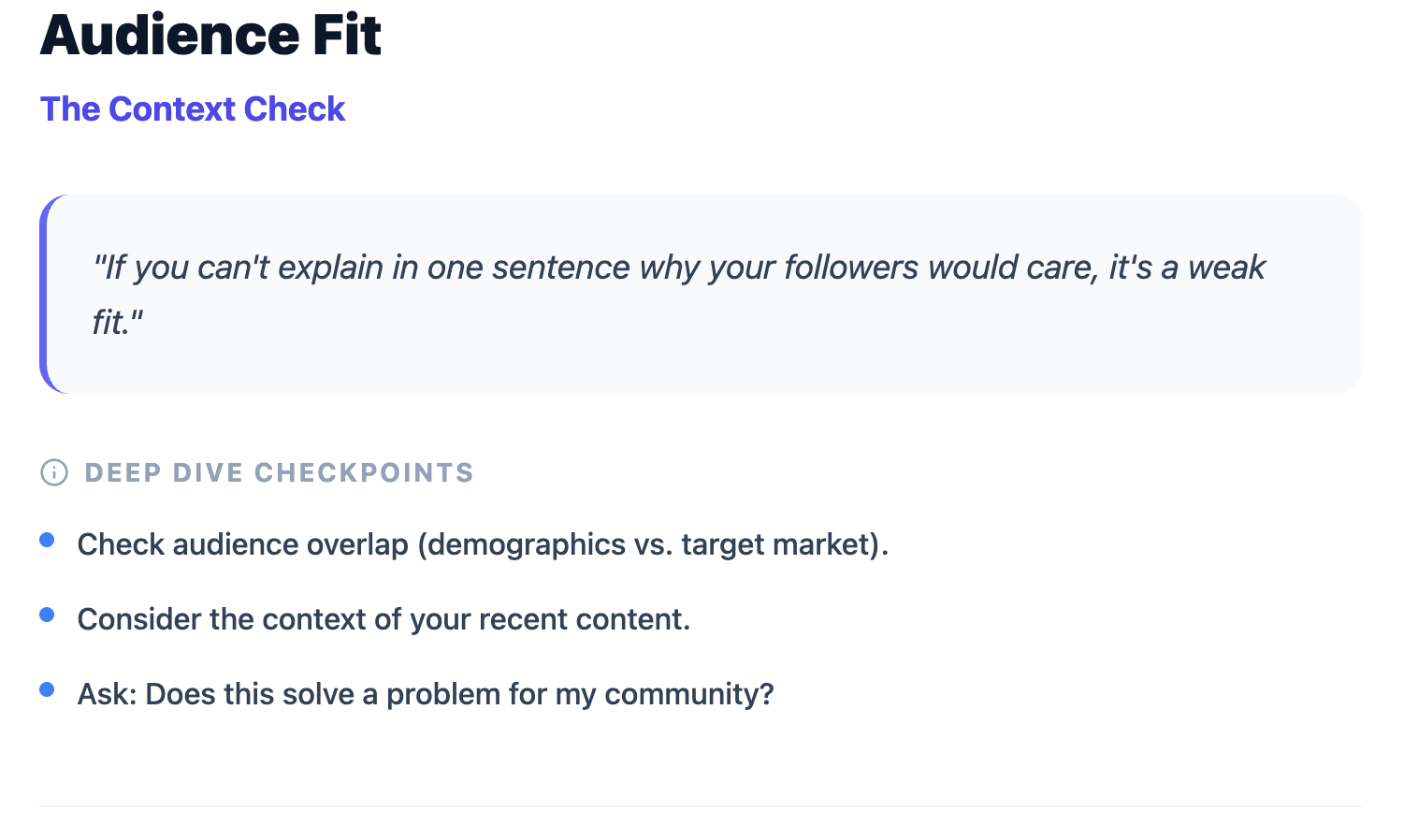
Ask yourself one simple question: would my followers care about this even if I wasn’t paid to post it?
If you can explain the fit in one sentence, you’re in a good place. If you’re trying to force the connection (“well… technically…”) it’s probably a mismatch.
A good fit doesn’t mean every follower loves it. It means the right followers immediately get it.
Filter 2: Product proof (would you use it off-camera?)
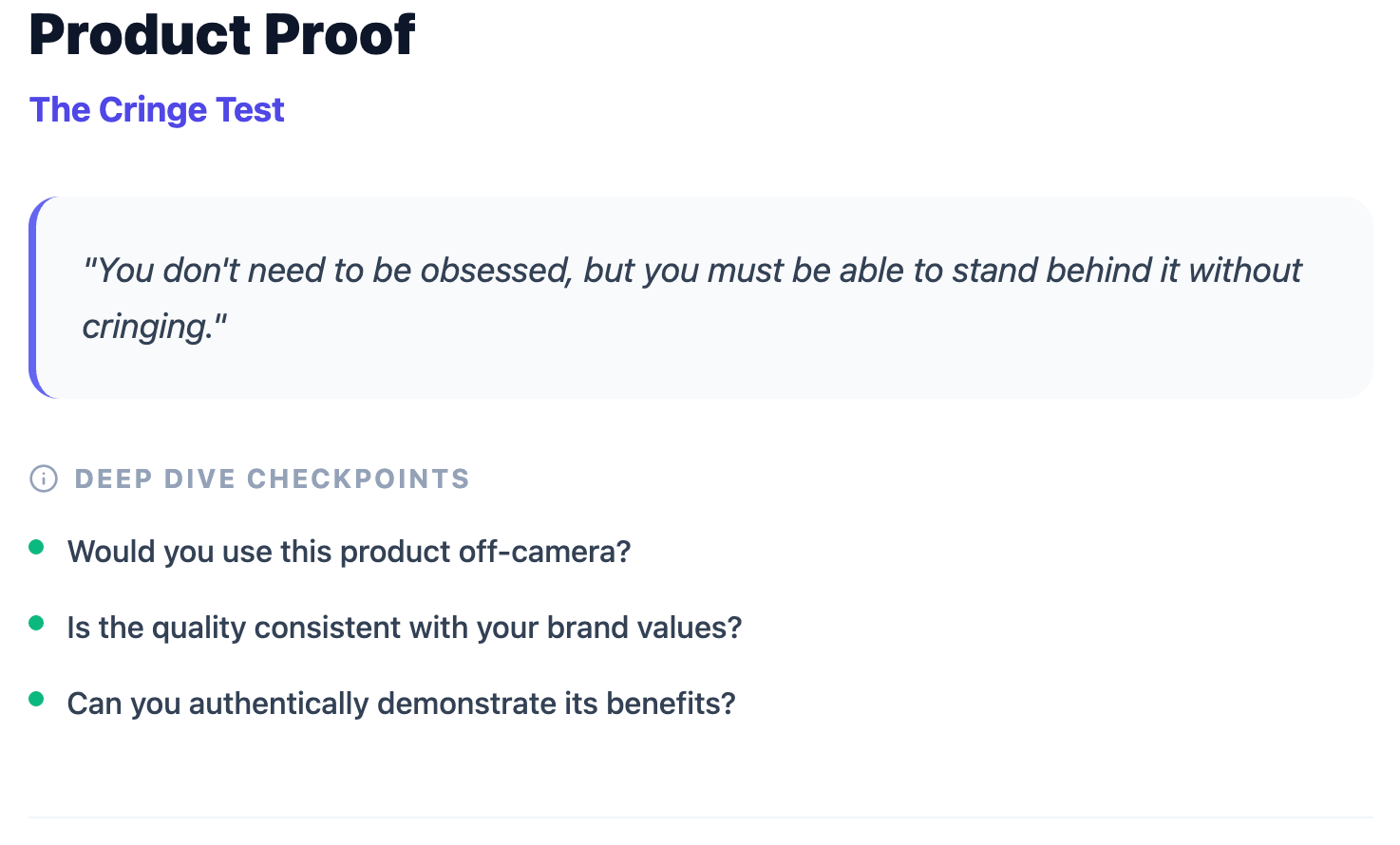
This is where creators protect their credibility.
You don’t need to be a superfan of every product you promote. But you should be comfortable using it, showing it, and talking about it without exaggerating.
If you wouldn’t use it off-camera, the audience usually feels that. Even if they can’t explain why, they sense the energy is “salesy.”
Filter 3: Brand expectations (usage rights, deliverables, whitelisting)
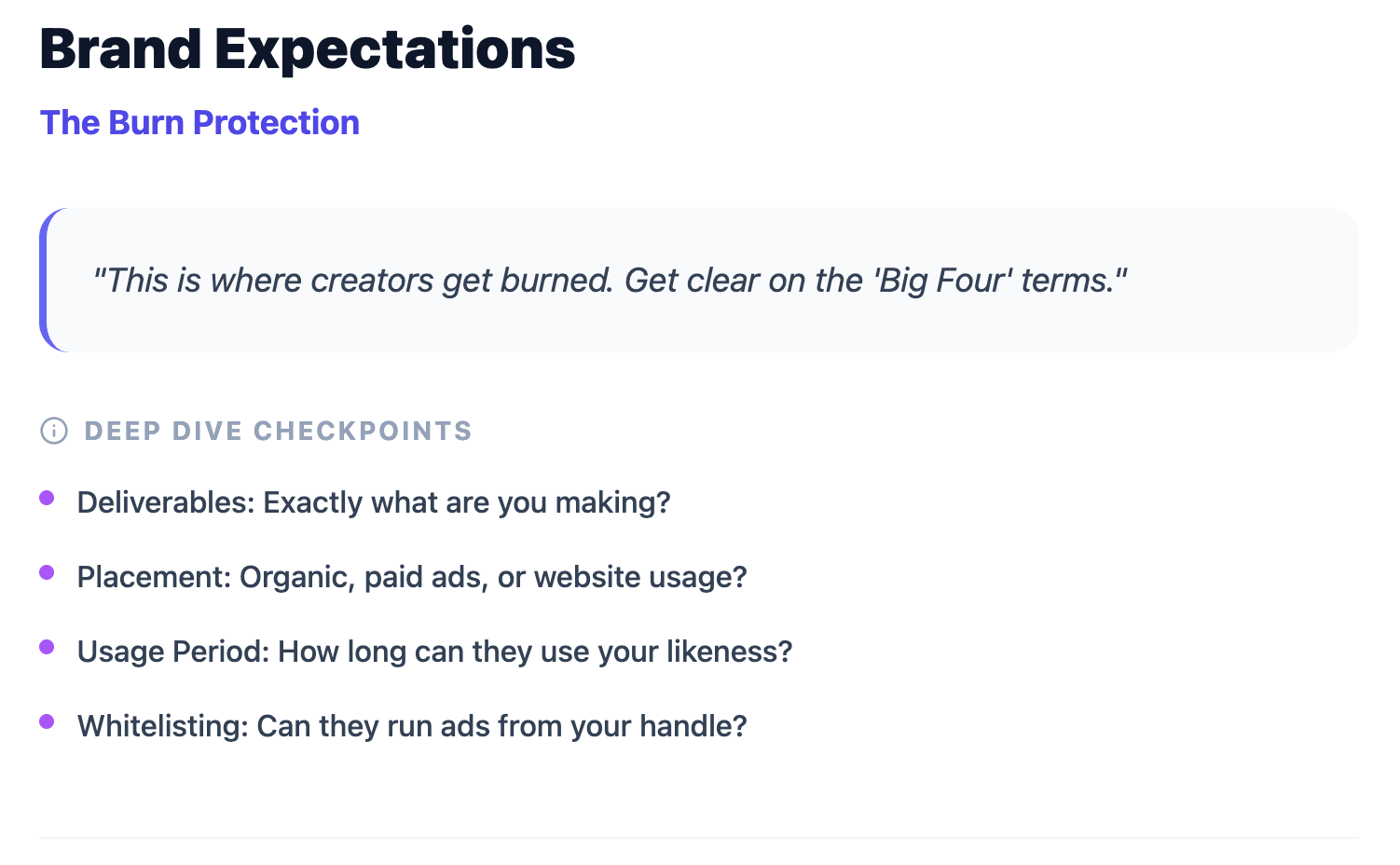
Most bad partnerships aren’t bad because of the product. They’re bad because the expectations are unclear.
Before you agree, you should know what you’re making and how it will be used. At minimum, clarify:
- what you’re delivering (one Reel, two Stories, raw footage, etc.)
- where it will be used (your IG only, their IG, website, ads)
- for how long they can use it (30 days, 6 months, unlimited)
- whether they want whitelisting/boosting (running ads using your handle or content)
If a brand avoids these details, it’s not a “small detail.” It’s the whole deal.
Filter 4: Pay vs workload (your effective hourly rate)
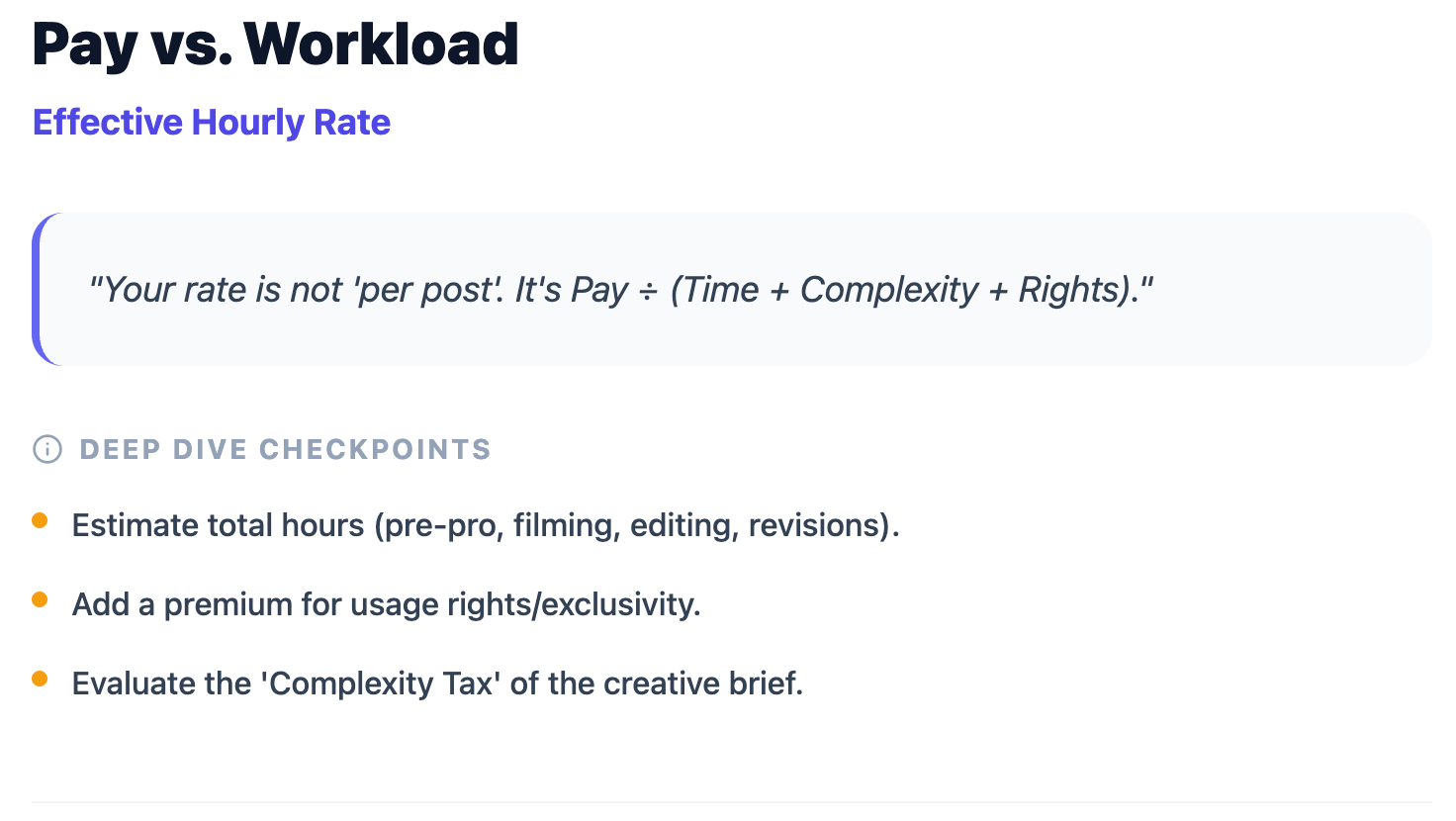
Creators get underpaid when they price the post, not the work.
A “simple Reel” can easily include scripting, filming, re-shooting, editing, captions, revisions, and communication. Add usage rights on top, and it’s not the same as a normal post anymore.
If the pay doesn’t match the time, the stress, and the rights, the deal is not worth it.
Filter 5: Content freedom (scripted vs creator-led)
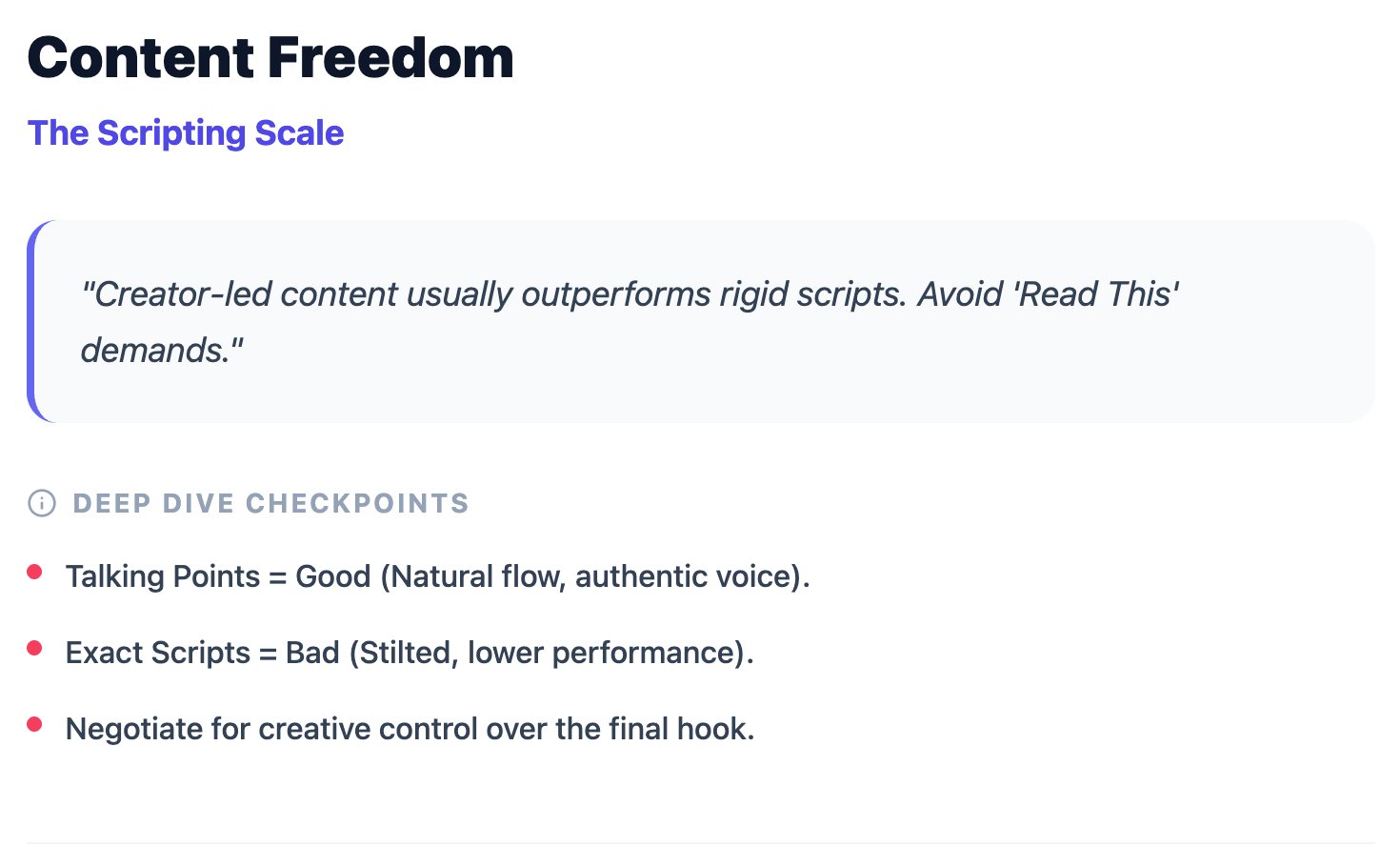
Creator-led content usually performs better because it sounds like you.
If the brand gives you talking points and a clear goal, that’s healthy. If they give you a rigid script and want you to sound like an ad, it usually hurts both your results and your audience trust.
The more you can keep your voice, the more “native” the content feels. That’s what attracts followers instead of pushing them away.
Filter 6: Long-term upside (repeat work, referrals, portfolio value)
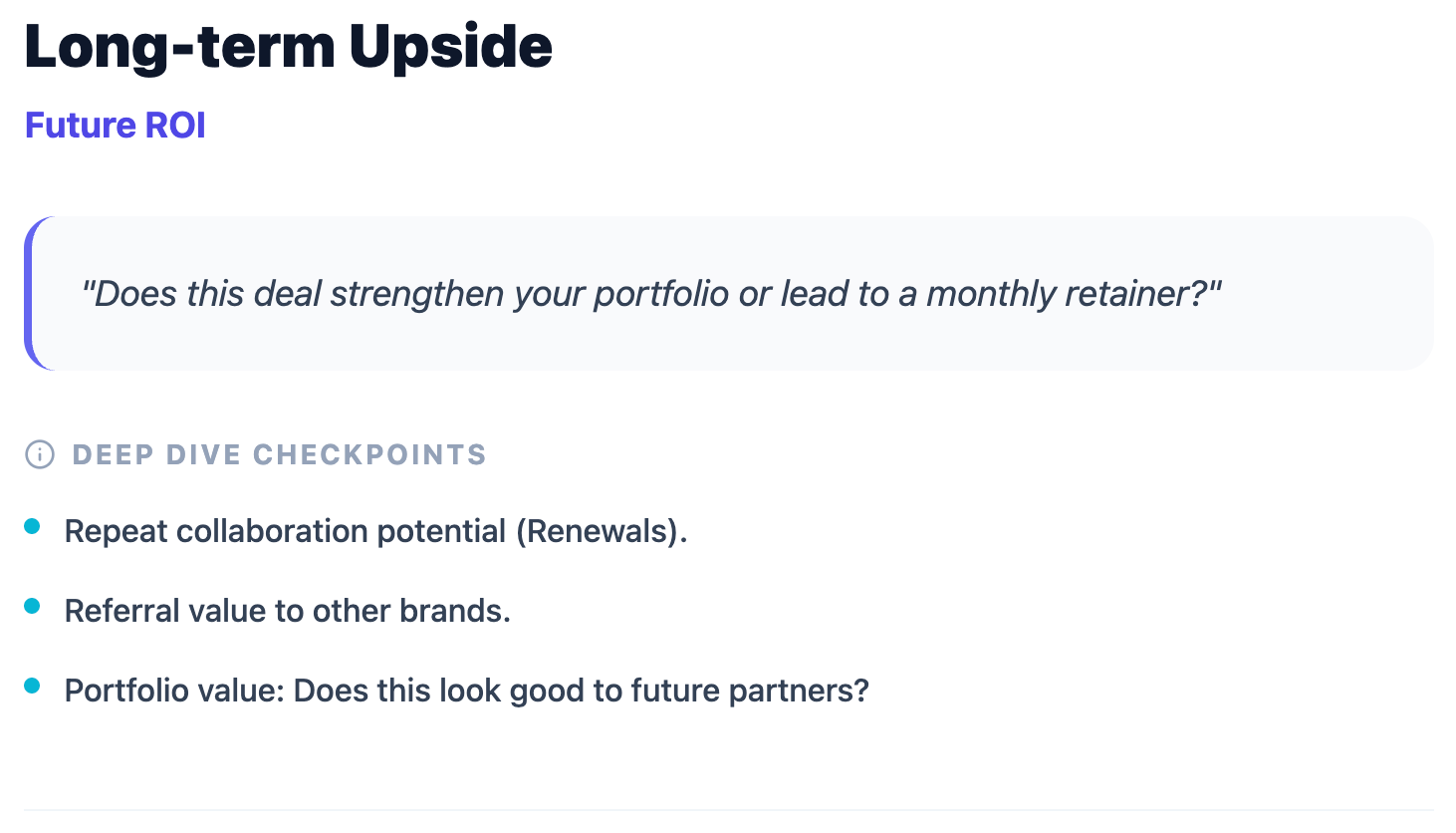
A deal is stronger when it has future value.
Sometimes that’s repeat work (the best outcome). Sometimes it’s a great portfolio piece you can show other brands. Sometimes it’s a brand that opens doors, because other companies in that niche will take you more seriously.
If a partnership has no upside beyond the payment, it needs to be very well paid to be worth it.
3) Red flags that cost creators long-term
Some partnerships look normal on the surface, but the process is messy, the expectations keep changing, and you end up spending way more time than you planned. Even worse, the final content feels off, and your audience can tell.
Here are the red flags that usually lead to bad outcomes:
- The deliverables are vague. If it’s “a few posts” or “some content,” it’s a recipe for scope creep.
- Usage rights are unclear, or they casually say “we’ll use it everywhere.” That can turn one post into an unlimited ad asset without proper payment.
- Everything is rushed. “We need it tomorrow” usually means poor planning on their side, and stress on yours (without extra compensation).
- The brand is overly controlling. Heavy scripting, too many approvals, and constant revisions are a sign the content won’t feel like you.
- No revision boundaries. If there’s no limit, you can get stuck in an endless feedback loop.
- “Exposure” is the main offer. A serious brand can support creators with a real budget, even if it’s small.
If you see one of these, it doesn’t always mean you should walk away. But it does mean you should slow down, clarify terms, and price the deal like a high-friction project, not a simple post.
4) Quick negotiation lines (copy/paste)
Negotiation doesn’t have to feel like conflict. Most of the time, you’re not “asking for more.” You’re just making the deal clear so both sides know what they’re agreeing to.
Here are a few lines you can reuse without sounding aggressive:
To clarify usage (the one that saves you later):
“Happy to do this. Can you confirm where the content will be used (organic only vs paid ads) and for how long you’d like usage rights?”
To prevent scope creep:
“I can deliver (X) by (date). If you also need (Y), I can price that as an add-on so everything is clear.”
To keep content creator-led (and protect performance):
“I’ll cover the key talking points, but I’ll keep the wording creator-led so it feels natural and performs better with my audience.”
If whitelisting is involved, you can keep it simple too:
“If you’d like whitelisting/boosting, can you share the planned budget and duration? I price that separately since it’s paid usage.”
5) How brands should evaluate creators (so it works for both sides)
If you’re a brand, choosing the “wrong creator” usually doesn’t look like a disaster at first. The creator seems nice, the content gets delivered, and everything is technically fine.
But the results feel flat. The content doesn’t match the brand. The audience doesn’t care. Or the creator’s style just isn’t built for selling.
The best partnerships happen when brands prioritize fit and execution over vanity metrics.
Fit matters more than follower count
Follower count tells you how big someone is. It doesn’t tell you if they can move your product.
Brands usually get better results from creators whose audience and content style match the product naturally. A smaller creator with the right niche and strong trust can outperform a bigger creator with a general audience.
What brands should look for in a creator
You don’t need a complicated scoring system. You need a few signals that predict a smooth campaign and content that performs.
- Consistency and quality. Do they post regularly, and does the content look “finished”?
- Audience match. Do the comments and community look like your customers?
- Natural brand content. Have they done sponsorships before without sounding forced?
- Reliability. Do they communicate clearly and hit deadlines?
- Clear boundaries. Rates, usage terms, and deliverables should be easy to understand.
A good creator makes the brand feel cooler. A great creator makes the product feel like it already belongs in their world.
What brands should include in a brief (so creators can say yes faster)
Creators don’t need a 10-page PDF. They need clarity.
A strong brief usually includes: what the product is, what the key message is, what content you want (deliverables), when you need it, and how you plan to use it (organic vs paid, and for how long).
When a brief is clear, creators can price correctly, plan correctly, and deliver faster. And the partnership starts with trust instead of confusion.
6) Find better-fit partnerships faster (CTA)
The hardest part about choosing the right brand partnerships isn’t knowing what a good deal looks like. It’s finding enough good-fit opportunities that you don’t feel forced to say yes to random ones.
That’s the real trap: when deals are rare, creators accept mismatches. When opportunities are consistent, you can be selective.
If you want partnerships that match your niche and content style, use Social Cat to connect with brands that are already looking for creators like you. You’ll spend less time chasing, less time negotiating basic clarity, and more time doing collaborations that actually make your page stronger.

Written by
Stefan A.
Stefan is a Growth Marketer turned founder with a background in customer acquisition, Influencer Marketing, and early-stage startups. At Social Cat, Stefan drives day-to-day operations and growth, helping small brands connect with the right influencers to scale their reach and impact.